

Advancing Aging Research: The Old Grey Muzzle Tour 2015
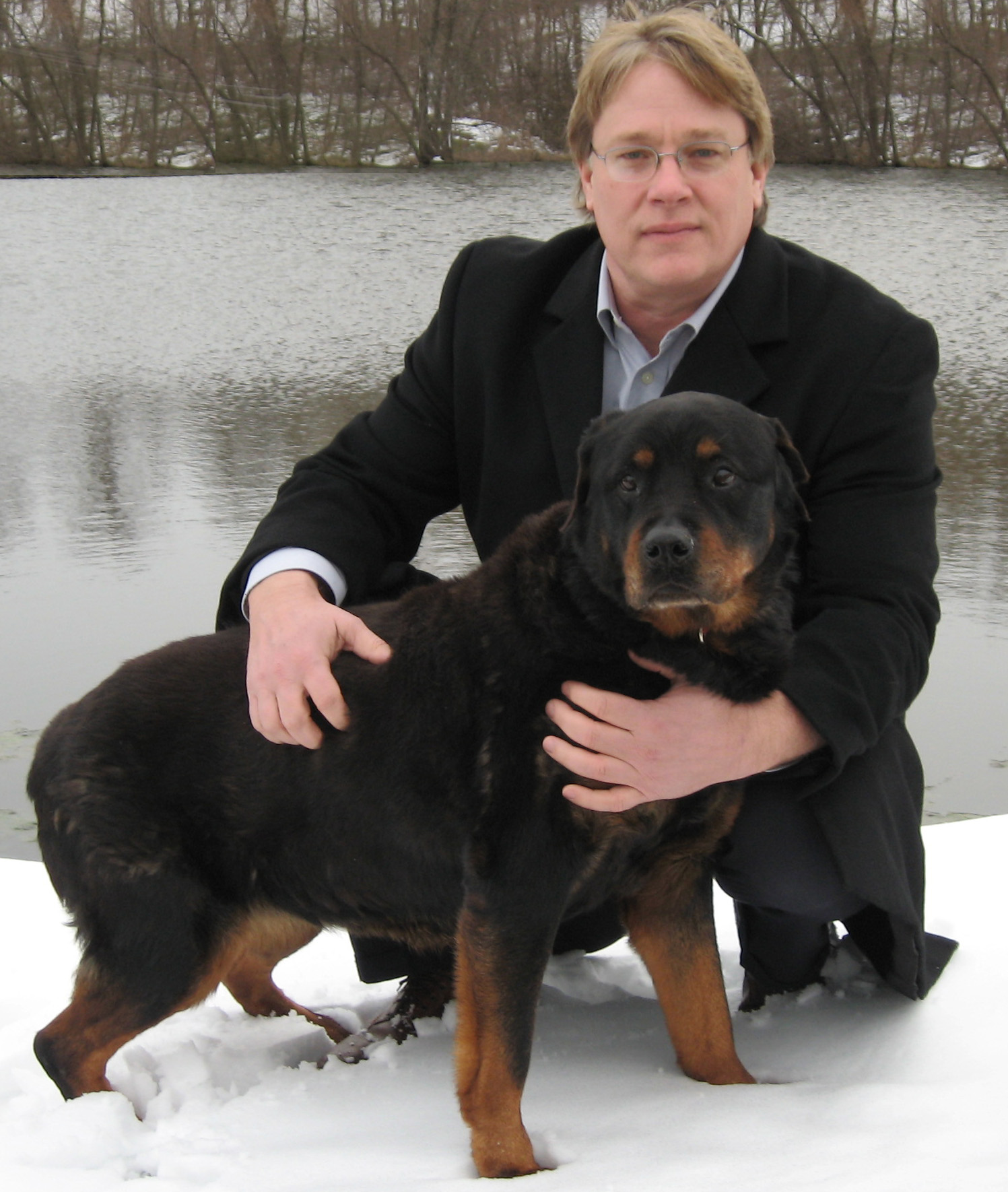
Welcome to The Old Grey Muzzle Tour 2015, a scientific expedition to uncover the secrets of successful aging and cancer resistance. Beginning in March, I’m embarking on a 68-day, cross-country trek to study 14 of the oldest-living Rottweiler dogs in the U.S. in their homes.
My research team is proud to be innovating research on healthier aging by committing ourselves to the intensive study of these exceptional dogs. We believe that dogs with extreme longevity — equivalent to humans who reach 100 years —hold the keys to unlocking the mechanisms that connect cancer resistance and successful aging. Just imagine:The Oldest Dogs as Our Greatest Teachers.
From our Exceptional Longevity Database of more than 300 canine centenarians, we have learned a lot about the lifetime health and medical histories of these exceptionally long-lived dogs. But our desire is to understand more deeply the biology behind highly successful aging. That’s why I am heading out of the laboratory and into the living room. There's just no substitute for making first-hand observations. So I'm hitting the road to connect the dots.
Ultimately, our goal is to develop a national resource for scientists trying to understand what it takes for dogs and humans to achieve healthy longevity. That is why we have established the Longevity Biorepository
at the Center for Exceptional Longevity Studies — the world’s first collection of serum, blood cells, DNA, and autopsy tissues from exceptionally long-lived dogs.
I believe strongly that as investigators we have a dual role: To Discover, To Educate. The Old Grey Muzzle Tour 2015 embraces this theme by including Celebration Stops along the way where I lead an evening of thought-provoking discussion with the goal of educating groups who have extended their support for the research. We see it as a vital opportunity for folks to celebrate our stories of solid progress and to get caught up in the process of discovery, catching a glimpse of far horizons.
Thanks for joining us on a journey that is sure to secure a spot for us at the forefront of scientific discovery — applying new tools, new attitudes to expand our capacity to translate research ideas into practical ways of promoting healthy longevity for both pets and people. Follow us on Facebook at: www.Facebook.com/TheOldGreyMuzzleTour.
| David J. Waters, DVM, PhD Director Center for Exceptional Longevity Studies Gerald P. Murphy Cancer Foundation |
|